

Book Review
~ Books by Leicester Author Clive Collins ~
(In association with Amazon.co.uk)


Click on any book title below to order that item
[Lynda Page] [Sue Townsend] [Julian Barnes] [Max Wade-Matthews] [Clive Collins]
[Jane Adams] [Patricia Wendorf] [Joe Orton] [Colin Wilson] [John Thomas Edson]
~ Clive Collins ~
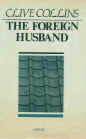
Clive was born in Leicester in 1948. He has worked as a teacher in Ireland, West Africa and Japan. His first Novel, The Foreign Husband, appeared in 1989, and a second, Sachiko's Wedding, was published in 1990. He presently lives in Tokyo with his wife and daughter. From the cover of Misunderstandings, published in 1993, his first collection of short stories: "...the air hangs heavy with the sorrowful restraint of misshapen and misled lives: fears and desires remain unspoken, passions unspent and dreams unfulfilled. The author moves through different worlds from postwar Britain to contemporary America and urban Japan, observing with poignant understatement and irony that the vast array of languages and codes we are taught can lead not to expression and communication but to enclosure, misinterpretation and lives spent in waiting, dreaming, wishing and despair."
Click on any book title to order that item


5
Click to Order 6
5
Click to Order 6
5
Click to Order 6
Synopsis
Unemployed and with his marriage failing, David Kennedy goes to what he hopes will be a better life in Japan. There, among the careerist diplomats, cynical expatriates, polite but distant colleagues, he meets a young and deeply disturbed Japanese woman, Megumi. The two drift into an ill-starred relationship and both discover that, after all, the past is not a country either of them can leave behind.
Synopsis
On the day of her wedding, Sachiko Miura, the daughter of a wealthy Tokyo businessman, looks back on her life and her inability to escape the restrictions of Japanese society.
Synopsis
With this collection, the author conveys in his stripped-down prose, and
wicked sense of humour, the tension and paradoxes of denial: the bitten
lip, the unsaid word, the moments of opportunity that pass and are gone
forever. And with sympathy and clear sight, he communicates the silence of
those who only live in their dreams.
Reviews:
Clive Collins was kind enough to recently forward to me (from Japan) a signed copy of his latest book Misunderstandings - a wonderful collection of short stories. I immediately sought out the two stories that I knew were related to life in Leicester in the '50s. Remember those interminable journeys to the coast to grab a few days in the sun (or more likely the rain)? Journeys by coach, train, or if you were fortunate enough, by car? Journeys to destinations like Skeggy, Mablethorpe, Ingoldmells, or Clacton? For me it was usually to somewhere like Hunstanton, but far more often, it was more likely to be a trip to my Grandmother's cottage in Sheringham. In The Sea, The Beautiful Sea, memories of those days are captured beautifully by Clive in this short - somewhat autobiographical - story about a young Leicester boy's family and their annual pilgrimage to the coast. A journey that for many of us in those days, might typically have started out with such promise and excitement, especially after the late night preparations beforehand and the sleeplessness experienced because of the anticipation of it all. But then how quick was the precipitous degeneration into family fights and accusations as the stress of it all quickly brought out the very worst in everyone. Ah the memories of the English family holiday.
Not all is well for this family either. They have their own particular brand of squabbles and arguments to deal with (today we'd call this family dysfunctional). Not only that, there's also that archetypal horror, the seaside landlady to deal with. She who lays down the strictest of rules for conduct in her home, while all the time treating her guests like dirt - a vile intrusion in fact - instead of welcomed visitors. Not only is this story endearing because of how well we can identify with the characters and there attempts to find a little happiness once a year, it also endears us because so much of it is nostalgic in a very general sense: the simple mention of things like the Corona man, Vimto and Tizer, cheese and onion cobs, Radio Luxembourg and stopping at a transport 'caf' to break the journey on the way to your 'hols.' The young boy and his family try to make the very best of their time away; however, it's a constant battle to try and outwit their demanding and domineering B & B lady: the disastrous search for the chamber pot (the 'po') in the dark because the landlady will not allow lights on after ten o-clock; hiding the results of the young lad's bed wetting problems; the exploding beer can or the holes in the net curtains as the parents try to sneak a smoke by the bedroom window in the dark.
In the late 1950's Britain, children are brought up in an intolerant world: The Sea, The Beautiful Sea brings together in a black farce memories of a Leicester families holiday full of pettiness, upset and mishap with just one afternoon of sunshine and calm blue sea to bring relief. With this collection, the author conveys in his stripped-down prose, and wicked sense of humour, the tension and paradoxes of denial: the bitten lip, the unsaid word, the moments of opportunity that pass and are gone forever. And with sympathy and clear sight, he communicates the silence of those who only live in their dreams.
I guarantee you will enjoy this story and the other Leicester tale that follows it as well: Telling Stories. The book in general is a rich collection of tales from Leicester to Colorado to Japan. Misunderstandings won the Macmillan Silver PEN award for short fiction in 1994.
Misunderstandings: Comprises ten pieces which amply fulfill the promise shown by Clive Collin's earlier novels. The quality of the delicately crafted prose suggests that this is in fact a writer of considerable skill with a far wider repertoire of themes and subjects to draw on than many of his contemporaries. The stories themselves are rich in narrative virtues. These are figurative rather than abstract pieces, but their art is never in doubt. They are superbly composed, with hardly a single false note Six of the ten stories deal with Japanese women and five of these are set in Japan. The author's insight and understanding are admirably keen, especially in "A Floating World" where he puts a a young couple in Venice and catches exactly the discomfort and controlled panic which the Japanese often experience in the forays outside of their carefully managed islands. Some of these tales hit a lighter note: "Her Victory," with its resourceful husband-hunter; "Housework or the Ideal Husband," in which a foreign writer ends up servicing all the housewives in his apartment block. But in general they are very sad whether dealing with the drudgery of Japanese domestic life ('Waka') or the small tragedy of love destroyed by convention ("A Blue Ribbon"). The author's perceptiveness seems principally driven by compassion: if you want to know what it feels like to be a middle-aged Japanese woman slaving in a lunch bar, then read his tour de force, " A Slight Misunderstanding." By the same token, there is not much about the world of Japanese men, who clearly do not engage his feelings. The 'misunderstandings that occur here are apt to be between or within individuals as often as between cultures. If the Japanese stories have any faults, it is that they go over ground already covered in "Sachiko's Wedding" and that some deal with subjects (prostitute housewives, mothers molesting their sons) familiar from more lurid accounts of modern Japan. And in some respects they are a little old-fashioned: a story that fully reflected the experience of an unhappy Japanese woman in the 1990s would most accurately be entitled "Sachiko's Divorce." If the Japanese stories are touching and instructive, it is in the stiries set elsewhere that Collins really shifts into high gear. Partly this is a question of idiom. Years in Japan have not blunted the author's ear for his native toung and he clearly loves English speech patterns. In "The Snowman," he has great fun playing off American English against the home grown variety. "The Sea, the Beautiful Sea" and "Telling Stories" both portray their lower class provincial milieux not just by detail and setting but also by their excellent rendition of common [Leicester] speech. And in these stories he is best able to lift his style nearer to poetry, to transform the commonplace with intimations of something higher. This is a book which more than earns its award. Read it to be informed and entertained, but above all to be moved. Driven by Compassion by Paul St John Mackintosh
Short Stories By Clive Collins
Spell on You
Stevie Macnamara called himself Stevie long before ever Little Stevie Wonder or Stevie Winwood come out, so it were hardly right to say, like some did, that this were affectation on Stevie's part because it weren't. Stevie always were just a little bit different, and that plus the fact he were such a liar, which even I have to say he were, accounted for him never having many friends, though I liked him.
Definitely different though, Stevie. In 1963, when everybody else tried hard to look like George Harrison or Brian Jones, Stevie went and had his head cropped. He kept it that way all one year, but the following summer, at just about the same time Ron's on the Tower give up clippers for scissors, and the town Mods what went there was all asking for short cuts again, Stevie let his sides get long, then slicked the buggers back. Some of them at school started calling him Grease when they seen this development, though it weren't Brylcream he used, nor Sylvikrin neither, because they wouldn't do the job. It were Imperial Leather pomade Stevie put on his hair. I should know. I went into Boots with him often enough to fetch it. Bloody terrible stuff and all, the smell alone having the strength to empty the top deck of a 53 bus. You always knew Stevie's whereabouts in them days.
So there were how he done his hair, and then there were his taste in music. Them days, lads never felt properly dressed unless they had a twelve-inch LP in one hand when they went out the door. It were important what LP it were and all. Ote by the Rolling Stones were all right, some Beatles. Hard Day's Night were acceptable, so were Rubber Soul, but not Beatles for Sale. Well, Stevie used to carry records around the place with him same as the rest, only his would be by people nobody had ever heard of like Lefty.
Continued: just click on the link immediately below
The Weather That Christmas
The weather that Christmas, the Christmas Stevie Mac last saw Stella Oliver! So cold and dry to begin with, then snow, and afterwards black ice on the roads, fog. He was back at home again of course, but only because their Carmel had made him come, paying his fare and packing him onto the bus, just the way she had at the end of the summer. Things were difficult at home. His mother was being funny, not with him so much, although there was that, but with their Carmel, which was on account of that business in the summer when Carmel had answered her back, stuck up for Stevie. And then there was what came afterwards. They were speaking, his mother and his sister, but only when they had to and with a frostiness in everything. His mother didn't know he'd been stopping with Carmel. At least, he thought she didn't. For what she knew, he'd been where he'd told her he would be: in London with his pal, the one she was none too fond of.
He had been in London. It was just that he'd not stayed for as long as he'd said he would. Instead, he got a bus from Victoria to Ipswich, where their Carmel was living then, and turned up on her doorstep unannounced. "You might have rung," was the greeting he had off her, and, "we've people coming, you know, for the Christmas." She wouldn't turn her youngest out of her room for him, as she had in the summer when he was there, so he'd to make do with the sitting-room sofa. The second night he couldn't sleep for the aching in his neck and sometime early in the morning he was sick into the wastepaper bin. That day, because she could see he was poorly, Carmel allowed him upstairs to bed, although he was down on the sofa again that night, and two more after that, he was on the bus going home. It was bitter cold. The trees were stripped stark, and fields he'd seen furrowed in the autumn were frozen, brown and empty.
There was nothing for him to do at home besides sit over the fire with a book, and he'd not the money to go much about the town. He'd thought to earn thirty or forty pounds in London working for the GPO the two weeks before Christmas, which would have seen him through the holidays handsome for a change. The only thing was, he slept in one morning and when he got to the sorting office they finished him there and then, so he ended up with less than twenty. Fifteen of that went to his mother not long after he got inside the house.
Continued: just click on the link immediately below
The Lost World
Tim had a feeling it was going to be a special year for Leicester City from well before the season started, and although they didn't do much in the first game there was still something about the way they knocked the ball around even when they were losing two-nothing that said this was not how things would be for very long. It was like a promise made him by the shine of the new grass out on the pitch or the way the chalk-dust puffed up off the by-line and floated in the sunlight of the September afternoon that time Fludie went round the opposition's big left-back.
When Tim got in home that night after saying traa to their Tony, everything he looked at in the house seemed different, though he knew it couldn't be. His mam was stood in the kitchen seeing to the tea just the same as usual on a Saturday, and the tea she was seeing to was more or less what they always had then: a good tea with hazlet and a pork pie and cheese, and a nice bit of cake from a shop up town to follow. Yet when Tim brought his mam's evening paper through from the front, he looked and it was as if he'd never seen the table laid that way before, with his grandma Nolan's best linen cloth on it, and the good china and that set of knives and forks his mam had got at the seaside two summers previous when she came up on the bingo. And then, when his mam said what she always said whenever he got back from a match, which was, Well, how did they get on? Tim told her they'd lost, but what he didn't say, what he kept all to himself, was that this time losing didn't matter.
It didn't matter. It didn't matter because the next game, which was away to Fulham, City won, and then they won their next home match as well. That was on a Wednesday night only Tim wasn't let go because he'd not long started at the grammar school and there was home work to do at night now. He had to content himself with reading about the match in the Chronicle the next day, but then as well, Tony and Cath always came round for a bath on a Thursday night, so Tim got what details the paper had left out from his brother.
The next three matches were all draws, and then there was a home game lost to Tottenham four-three, after the City had been two-nothing up at half-time. Thrown away, Tony said on the bus going home, and he was right, though this only made Tim surer that it was going to be a special year because the City had thrown the game away. Tottenham hadn't so much won the match as had it given to them by a side that, in the first half, had made the Spurs look ordinary and then, after the break, more or less decided to stop playing.
There were more defeats after Tottenham, and a lot of the men who regularly stood round Tim and his brother on the Popular side of the ground started grumbling about how it was the same old story with City season after season. How they never had been any good, and never would be, never would be. Tim listened to this kind of talk because being just a lad he couldn't do otherwise, but he didn't believe it. What Tim believed were the signs, and the signs were good as far as he was concerned...
Continued: just click on the link immediately below
[Lynda Page] [Sue Townsend] [Julian Barnes] [Max Wade-Matthews] [Clive Collins]
[Jane Adams] [Patricia Wendorf] [Joe Orton] [Colin Wilson] [John Thomas Edson]
[Referral Programmes] [Home Page]
[TOP]